Make Life Better for an Older Dog: 8 Simple Ways
Watching a much-loved dog grow older can be bittersweet. They may move a little more slowly, sleep a little longer and need a helping hand with things they once managed without a second thought. But there are plenty of simple ways to make life better for an older dog, helping them stay comfortable, safe and very much part of family life.
Often, it isn’t about making huge changes. A softer place to sleep, a safer floor, or an easier way to reach the garden can make an enormous difference to an older dog’s day.
As an Amazon Associate, I earn from qualifying purchases. I only recommend products I genuinely believe will be useful to my readers.
Having cared for older dogs myself, I know how quickly you start noticing those little things. You find yourself adapting the house around them almost without thinking — because when they’ve spent so many years making us happy, keeping their later years as comfortable as possible feels like the very least we can do.
1. Give Them Somewhere Really Comfortable to Sleep
Older dogs can spend a lot more time snoozing, so a warm, supportive and comfortable bed becomes more important than ever.
A good orthopaedic or memory-foam bed can provide extra support for an ageing dog’s body, while a low or easy-access edge means they don’t have to clamber into it. Look for a non-slip base too, particularly if the bed sits on a wooden or tiled floor.
Don’t automatically throw away an old favourite bed, though. Dogs can be wonderfully attached to familiar smells and sleeping spots. Sometimes adding a supportive mattress, soft blanket or extra layer of padding to the bed they already love is all that’s needed.
Little comfort tip: Keep their bed somewhere warm and peaceful, but preferably not tucked away from everyone. Older dogs may sleep more, but many still like to snooze where they can hear their family pottering around nearby.
If your dog suddenly seems unable to get comfortable, becomes unusually restless at night or appears to be in pain, it’s worth speaking to your vet rather than assuming it’s simply part of getting older.

A little extra comfort: A supportive orthopaedic bed can be a worthwhile upgrade when an older dog’s usual bed is no longer quite enough. I particularly like this one because it’s supportive and washable — something that becomes increasingly useful when you’re caring for an older dog. Add a favourite familiar blanket, and they’ll soon make it their own.
2. Make the House Easier and Safer to Make life better for an older dog
Slippery floors can become surprisingly difficult for an older dog. As their legs become less steady, polished wood, laminate and tiles that never bothered them before can suddenly feel like an ice rink.
One of the simplest things I found was to put runner carpets along the hard floors, creating a grippy pathway between the places my dogs used most. Non-slip runners and washable rugs can give older paws much more confidence without carpeting the whole house.
Think about the route itself too. Moving a chair, footstool or other obstacle can create a clear pathway between their bed, food and water, the garden door and their favourite place beside you.
To Make Life Better for an Older Dog, Don’t Forget Failing Eyesight
Older dogs can also experience changes to their vision. One of my own dogs became blind, and I learned just how important a familiar, predictable home can be.
Once you’ve created safe pathways, try not to keep moving the furniture around. A dog with limited or no sight can learn where things are and navigate remarkably well when their surroundings stay familiar.
Keep food and water bowls in their usual places, make sure routes are free from things they could bump into or trip over, and consider blocking access to hazards such as stairs when necessary.
You don’t have to redesign your entire home. Sometimes a few strategically placed runners, a clear route and leaving familiar things exactly where your dog expects to find them can make an enormous difference to their confidence and independence.
Little safety tip: Occasionally get down to roughly dog height and look along their usual route. You may spot sharp furniture corners, trailing cables or other obstacles that aren’t nearly as obvious from where we’re standing.
3. To make life Better for an Older Dog, Make Food and Water Easy to reach
Mealtimes may need a little adjustment as your dog gets older. Bending, standing for long periods, or keeping their balance on a slippery floor can become more difficult, so watch how your dog eats and drinks rather than assuming the setup they’ve had for years still suits them.
Start with the simple things. Keep food and fresh water somewhere easy to reach, place a non-slip mat underneath the bowls and make sure your dog doesn’t have to negotiate steps or slippery flooring to get to them.
Some older dogs may find a different bowl height or style more comfortable. Rather than assuming a raised feeder is right for every senior dog, ask your vet if you’re unsure what would best suit your dog’s individual needs.
And keep an eye on changes. A dog suddenly drinking much more or less than usual, struggling to eat, losing interest in food or noticeably gaining or losing weight deserves a conversation with the vet rather than simply putting it down to old age.
Research Over-the-Counter Remedies To make life better for an older dog
It’s very tempting to reach for something promising to help stiff joints, digestion, anxiety or other problems associated with ageing. But don’t give an older dog medication, supplements or remedies without checking with your vet first.
Something described as “natural” isn’t automatically suitable for every dog, and older dogs may already be taking prescribed medication.
For this part of their care, the best thing we can buy them might be a comfortable bowl and a non-slip mat — and leave the medicine to the professionals.
Little comfort tip: If your dog has a favourite place to rest, consider whether the water bowl is close enough for them to reach easily throughout the day. A few extra steps can feel very different when you’re old and stiff.
4. Make Steps and Changes in Level Easier
Steps that an older dog once bounded up without a second thought can eventually become surprisingly big obstacles. And don’t forget the little changes in level around the home and garden — a doorstep or single garden step can be just as troublesome as a staircase, particularly for a small dog or one with poor eyesight.
My own garden is tiered with steps, which became difficult when my little blind dog grew older. I found rubber wedges — often sold as rubber threshold ramps — that created a gentle slope over some of the smaller steps.
They weren’t actually designed especially for elderly dogs, but they worked brilliantly for him. Instead of waiting for me to lift or guide him every time he encountered a step, he could use his familiar route much more independently.
For larger changes in height, a proper pet ramp may be useful for getting into the car or reaching a favourite sofa or chair. Look for something sturdy, with a non-slip surface and a gentle enough incline for your particular dog.
Outside, take a slow walk around the garden and look for the awkward bits: steps, raised door thresholds, slippery paving and sudden drops. Sometimes to make life better for an older dog, the answer isn’t an expensive piece of pet equipment at all — a simple ramp or safer route may be enough.
And although helping them is important, don’t automatically do everything for them. If your dog can safely manage something independently, giving them the chance can help them keep enjoying their familiar routine.
Little independence tip: Think less about where you can walk easily and more about your dog’s regular journey — bed to garden, garden to door, door to favourite chair. Making those few important routes easier can give an older dog back a surprising amount of freedom.
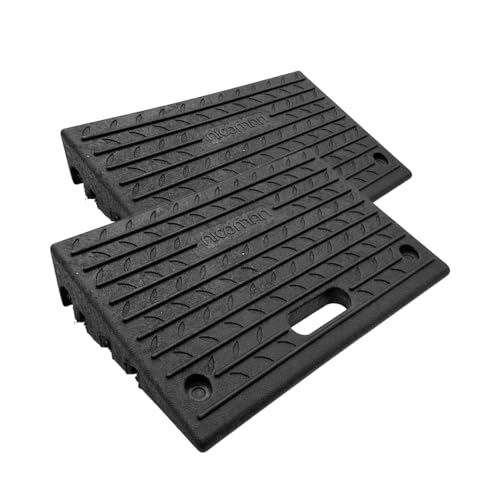
Something that worked for us: These rubber threshold ramps were one of my best finds for my little blind dog. The grippy surface helped prevent slipping, and turning a small step into a gentler slope gave him much more independence in our tiered garden. They’re actually designed as multi-use ramps rather than specifically for dogs — and ours proved so useful that they’re still in the garden helping us humans with the steps today!
5. Keep Them Warm and Cosy
Older dogs may become more sensitive to the cold, particularly when they’re less active than they used to be. A favourite sleeping spot that was perfectly comfortable a few years ago may suddenly feel rather draughty to an ageing dog.
Start with the simple things. Move their bed away from cold doors and draughts, add a soft blanket and make sure there’s plenty of padding between them and a cold floor.
You may also find that your dog starts seeking out the warmest places in the house. If the patch of afternoon sunshine or the spot beside the radiator suddenly becomes highly prized territory, it might be time to make their usual bed a little cosier.
A warm coat can also be useful to make life better for an older dog on cold or wet walks, particularly if they’re moving more slowly. Choose one that’s comfortable, easy to put on and doesn’t restrict their movement.
A Word About Heated Pet Beds
Heated beds and warming pads are widely available, but I wouldn’t automatically use one simply because a dog is getting older. An elderly dog with limited mobility may not move away from a heat source as readily if they become too warm.
If you’re considering a heated product, particularly for a dog with health or mobility problems, ask your vet whether it’s suitable first and follow the manufacturer’s safety instructions carefully.
Often, the decidedly unexciting combination of a good supportive bed, an extra blanket and a warm, draught-free corner is all that’s needed.
Little comfort tip: Check underneath the bed occasionally too. A cosy-looking bed sitting directly on a cold tiled floor can feel much colder underneath than you might expect.
6. Let Walks Become Sniffing and Pottering
As dogs get older, walks don’t necessarily have to stop — but what counts as a good walk may change completely.
The long, energetic outings of younger years may gradually become shorter trips with lots of pauses. And that’s perfectly all right. Sniffing and pottering can become the day’s activity.
My little blind dog particularly loved this. He might not have been able to see what was around him, but there was still an entire world to investigate with his nose. There was no need to hurry him along simply because we weren’t covering much distance.
To make life better for an older dog, let your elderly dog set the pace. Give them time to sniff, stop and explore, and be prepared to turn for home sooner than you once would have done. On some days they may manage more; on others, a gentle wander around the garden may be quite enough.
For dogs with poor eyesight, familiar routes can be reassuring. Keep them safely under your control, and be especially aware of kerbs, steps, approaching dogs, and other obstacles they may not see.
A comfortable, well-fitting harness may also give you better control and support than pulling against a collar, depending on your dog’s individual needs.
And remember that exercise isn’t only about distance. Being outside, sniffing familiar smells and spending time with you can still provide stimulation and enjoyment even when those walks become very small adventures.
If your dog’s ability or willingness to exercise changes suddenly, or they seem painful, breathless, or unusually tired, speak to your vet rather than assuming it’s just because they’re getting older.
Little happiness tip: Don’t measure an older dog’s walk in miles. Sometimes the best walk is the one where you barely get anywhere.
The Blue Cross also recommends regular, gentle exercise for older dogs, with plenty of opportunity to rest. Their advice on caring for older dogs is well worth a read if you’re adapting your dog’s routine as they age.
7. Keep Up the Little Everyday Things
As our dogs slow down, some of the everyday things they once managed for themselves can become a little harder too.
Regular gentle grooming gives you a chance to notice changes in their skin, coat, paws or nails, as well as any new lumps or sore areas. Take your time, particularly if your dog has become stiff or doesn’t like standing for very long.
Keep an eye on their nails too. A dog walking shorter distances may not wear them down as quickly as they once did, and overly long nails can make already-unsteady feet even more awkward. If you’re not confident trimming them yourself, your vet or a good groomer can help.
But everyday care isn’t all about checking things.
Keep talking to them. Give them the familiar fuss they enjoy. Let them snooze beside you while you’re doing something else. And if they’ve become slower to respond because their hearing or eyesight isn’t what it used to be, give them a little extra time rather than assuming they’re ignoring you.
Older dogs may need more help from us, but they still need to be allowed to be dogs — to sniff the garden, investigate interesting smells, enjoy their dinner and occupy precisely the bit of sofa you were intending to sit on.
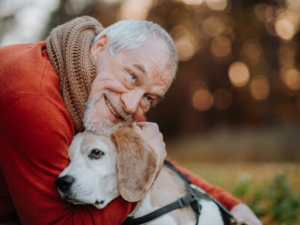
Little love tip: Don’t let all the checking, helping and worrying take over. Sometimes they don’t need anything fixing. They want you.
8. Handle Accidents With Kindness
A dog who has been perfectly house-trained all their life may begin having occasional accidents as they get older. It can be frustrating when there’s another bed to wash or puddle to clean up, but never let your dog think you’re cross with them.
They’re not being naughty, and they may be just as unsettled by what’s happened as you are.
If accidents or incontinence are new, becoming more frequent or accompanied by other changes, speak to your vet. Don’t assume it’s an inevitable part of getting older — there may be medical reasons that need investigating.
Once you’ve done that, a few practical changes can make everyday life much easier.
Washable waterproof bed protectors can save you from washing an entire dog bed repeatedly. Absorbent pads or washable incontinence mats can be useful around sleeping areas and near the door, while dog nappies or belly bands may suit some dogs, particularly overnight. Whatever you use, make sure your dog stays clean, comfortable and dry.
More frequent trips outside can help too. Offer a toilet break after waking, after meals and before bedtime, and don’t wait for an older dog to ask quite as clearly as they once did.
It also helps to keep spare bedding, towels and cleaning supplies somewhere easy to reach. Then an accident becomes exactly what it should be — a quick clean-up, a fresh blanket and life carries on.
Little dignity tip: No matter how many puddles you mop up, greet your old friend afterwards exactly as you did before. They haven’t changed. They need a little more help now.
A practical option: I prefer washable incontinence pads like these to something that makes the room feel clinical. You can place them under bedding or in a favourite sleeping area, then wash and reuse them after an accident. They’re kinder on the household budget over time too—particularly if you’re going through pads regularly.

The Older Years Can Still Be Good Years
Life with an older dog changes. Walks may become shorter, beds softer and daily routines a little slower. You may find yourself putting down rugs, moving furniture, building easier routes into the garden and keeping an ever-growing pile of washable blankets nearby.
But those changes don’t mean the good times have finished.
Their world may become a little smaller, but we can make that smaller world safe, comfortable and full of the things they still love — a favourite sleeping spot, familiar smells, a gentle potter around the garden and, most importantly, being close to their people.
I learned a great deal from my own two older dogs. My little girl even helped her blind companion find his way around, and watching them together was a lovely reminder that dogs adapt to ageing in their own remarkable ways.
We can’t stop our dogs growing old. What we can do is notice when they need a little more help, make changes when we can and let them continue doing the things they’re still able to enjoy.
And perhaps that’s the most important way to make life better for an older dog: don’t spend all your time worrying about what they can no longer do.
Enjoy what they can still do — even if today’s big adventure is simply a very slow sniff around the garden.